


Choosing the Right Fuel for Your Car in Australia
Car Care Tips25 August 2026
Learn how to choose the right fuel for your car in Australia, including petrol types, fuel grades, diesel and practical tips for better vehicle performance.
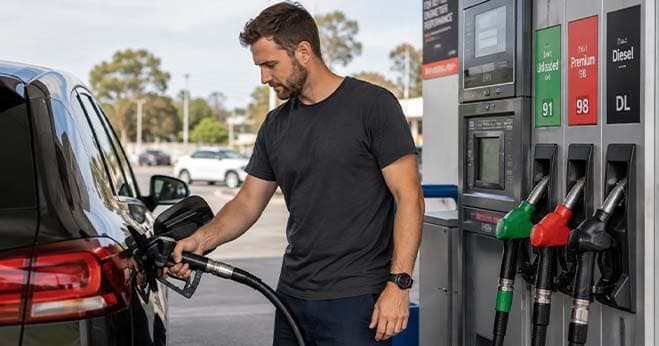
When you arrive at an Australian service station, the many fuel options may seem confusing. It is not an easy task to find the right fuel for your car. In order to consider all possible variables that come into play with petrol fuel rating, ethanol blends, kinds of diesel fuel, and changing prices, many things have to be considered. You need to choose the right fuel to avoid problems such as lower mileage and even engine damage.
In order to sort out this complicated scenario, it is important to ignore the marketing claims around it and focus only on the type of fuel your specific engine can use. No matter if it is a commuter car hatchback, a turbocharged sport engine, or a towing truck, matching fuel is essential for its protection. In order to find more information about car maintenance and care, visit Patel Auto Service.
Table of Contents
- Understanding Fuel Ratings (RON): What Do the Numbers Mean?
- Regular Lead-Free Petrol (91): Who Is It For?
- Premium Lead-Free (95 & 98): Performance and Manufacturer Demands
- E10 Fuel: Use, Blends, and Common Misconceptions
- Diesel Fuel: Torque, Heavy Hauling, and Maintenance Realities
- LPG (Autogas): Current Status and Uses in Australia
- How to Accurately Check What Fuel Your Car Actually Needs
- What Happens If You Use the Wrong Fuel?
- Fuel Quality and Long-Term Engine Health
- Professional Help from Patel Auto
- FAQ
Understanding Fuel Ratings (RON): What Do the Numbers Mean?
The figures written on ordinary lead-free fuel pumps, such as 91, 95, or 98, represent the fuel's Research Fuel Number (RON). This shows how well the fuel can resist engine knocking, which happens when petrol ignites too early because of high pressure inside the engine cylinders.
Many people mistakenly believe that higher-rated fuels can make an engine more efficient. However, a regular engine that runs well on 91 RON will not get any extra benefit from the more expensive 98 RON fuel. Higher-rated fuels are designed for high-compression or high-performance engines.
Regular Lead-Free Petrol (91): Who Is It For?
Lead-free petrol 91 is the most popular and cheap petrol variant in Australia.
Suitable For Vehicles: This fuel variant has been specifically designed for old vehicle variants, small hatchbacks, and ordinary engines with low compression ratio requirements. As such, this engine doesn't need high compression resistance to prevent any pre-starting problems, thus making 91 RON suitable for use.
Wide Application: Due to the fact that the majority of ordinary commuter vehicles are designed by manufacturers to operate on 91 RON petrol, 91 RON continues to be the basic petrol option for most people. The widespread application of 91 RON at every service station in Australia makes sure you always have access to petrol no matter where your destination may be.
Premium Lead-Free (95 & 98): Performance and Manufacturer Demands
The premium lead-free fuels available at 95 RON or 98 RON are more resistant to engine noise and may contain better detergents which guarantee fuel injector cleanliness.
Required or Recommended: Read your owner's manual very carefully. Should the vehicle require the use of the premium fuel, using the fuel of a lower grade can set off engine knock sensors, decrease the power of the engine and cause wear. Should the fuel be only recommended, your engine will balance itself with it.
Fuel Additives and Economy: Using the premium grade of fuel can guarantee that the combustion chamber remains clean, but, at the same time, the improved economy can be counteracted by the increased price per litre.
E10 Fuel: Use, Blends, and Common Misconceptions
E10 is a mix of regular unleaded gasoline and up to 10% ethanol, a renewable fuel made from grains and sugarcane.
Use: Although almost all new petrol cars produced in the last twenty years are E10-compliant, many older and vintage cars, as well as small motors like grass-cutting machines and boat engines, tend to be damaged by ethanol as their rubber parts get damaged.
Myths About E10: There is a popular belief that using E10 gasoline damages fuel efficiency completely. However, ethanol contains less energy per unit of volume than pure gasoline and thus may cause up to a ten per cent decrease in fuel efficiency, but still, it is cheaper at the gas station than pure petrol.
Diesel Fuel: Torque, Heavy Hauling, and Maintenance Realities
Diesel engines use compression starting instead of spark plugs, so they are basically different from petrol cars.
Applications of Diesel: Diesel fuel generates high torque even at low speed, hence becoming a better option for heavy 4WDs, pulling trailers and driving on long highways where fuel efficiency is important. The high pulling ability enables large cars to easily pull heavy loads on slopes without stressing the engine block.
Requirements for Diesel Cars: A diesel car has specific components, which include DPF and common rail technology, and it requires considerable time to clean the soot. Urban commuting only results in a blocked DPF and visits to the workshop to clear it. Getting your diesel-powered car on the highway guarantees that your exhaust system heats up enough for recovery of the filter.
LPG (Autogas): Current Status and Uses in Australia
One example of an alternative fuel that was commonly used in Australia was liquefied petroleum gas (LPG), which was branded as Autogas. At one point in time, many people in Australia preferred to use LPG as an alternative fuel because of its cheap price per litre compared to other fuels.
At present, the market of vehicles using LPG and built in factories is nonexistent. There has been a significant reduction in the number of filling stations for Autogas. Although there are a few older cars running on LPG, it is generally not economical to convert a direct supply petrol car to LPG, thus limiting this fuel type to a very specific range of users.
How to Accurately Check What Fuel Your Car Actually Needs
Do not make any assumptions or follow old habits from your last car or hearsay from other friends. Verifying the fuel needs of your car only takes a few seconds and saves your engine:
- Check the Fuel Cap: Remove your fuel filler cover; usually, manufacturers always imprint the minimum RON rating on the fuel filler cap.
- Check the Owner’s Manual: Find out from the technical specifications section of the owner's manual.
- Check via VIN: In case of purchasing a secondhand car without an owner's manual, your nearest dealership or mechanic can verify the factory recommendations based on your Vehicle Identification Number (VIN).
What Happens If You Use the Wrong Fuel?
Accidents will happen at fuel stations, especially the crowded ones, and fuel confusion is something that needs to be handled immediately.
Petrol in Diesel Engine: Running a diesel engine with petrol fuel causes damage to the high-pressure fuel pumps and injectors due to the absence of oil. Starting should not be switched on. If it has been driven, then pull over at the nearest safe area.
Diesel in a Petrol Engine: The introduction of diesel fuel in an ordinary lead-free car causes smoke, misfiring, and stalling.
Lower RON than Needed: Running a high-performance engine using 91 RON fuel where 98 is needed causes the knocking of the engine, which delays the timing of the car's computer.
If you encounter any problem or your car is having issues, please let our expert mechanics check your vehicle with our general automotive services of Patel Auto Service.
Fuel Quality and Long-Term Engine Health
The type of fuel you use has a direct relationship with the combustion process of your vehicle for many kilometres. Using poor-quality or incorrect fuel over time can cause carbon deposits in the intake parts and block the fuel injectors. Combining proper choice of fuel with periodic check-ups like scheduling a basic oil service will help remove leftover material and carbon build-ups.
Professional Help from Patel Auto
The selection of proper fuel is a very simple yet very essential part of being a responsible car owner. It will help you to save money and will be beneficial for your engine. Make sure you are following the guidelines given by the manufacturer and use the proper grade of fuel for your car.
In case your car is not working well due to incorrect fuel usage, or hesitates whenever you fill it with the wrong fuel, or requires regular maintenance, get in touch with the expert team of Patel Auto Service. You can visit Patel Auto Service for getting your engine checked.
Frequently Asked Questions (FAQs)
- Can I use 98 fuel in a car that normally takes 91?
- Yes, using a higher-rated fuel than required will not harm your engine, but it provides no performance or efficiency benefits for standard cars built for 91 RON, meaning it is essentially wasted money.
- What happens if I mistakenly put regular lead-free petrol into a diesel car?
- Putting petrol in a diesel vehicle destroys high-pressure fuel pumps and injectors due to a lack of oil. Do not start the engine, and have the fuel system professionally drained immediately.
- Is E10 safe to use in all cars?
- Most modern petrol vehicles built over the last twenty years are E10 compatible. However, older classic cars and small engines can experience degraded rubber seals and corrosion from the ethanol blend.
- How do I find out the correct fuel grade for my car?
- The most reliable method is to check the sticker inside your vehicle's fuel filler flap or consult the technical specifications section of your owner's manual.
- Why do some cars require premium unleaded fuel?
- High-compression, turbocharged, or performance engines need higher fuel ratings, such as 95 or 98 RON, to prevent early starting or engine knocking caused by high pressure inside the cylinders.