


What Are The Most Common Diesel Engine Repairs?
Servicing & Maintenance4 October 2026
Learn about the most common diesel engine repairs, including fuel system issues, turbocharger problems and overheating, plus when to see a mechanic.
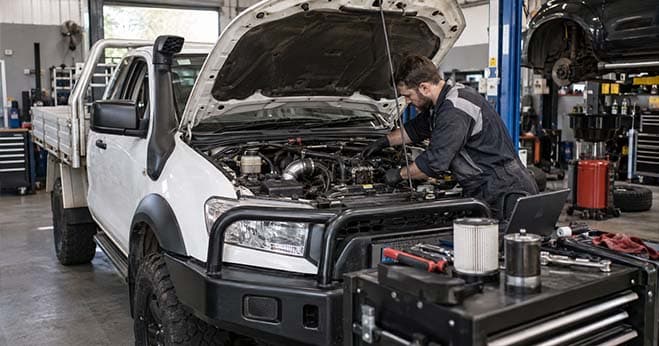
Diesel engines have a reputation for strength, and they earn it. Durability still does not mean they can skip maintenance. A diesel works at higher compression and higher temperatures than a petrol engine, so some parts wear and need attention as the kilometres add up.
Knowing what usually fails, and how to spot it early, is often the difference between a straightforward repair and a serious breakdown. If your diesel needs a proper diagnosis, the team at Patel Auto Service can help. These are the repairs we see most often, and what they mean for the vehicle.
Table of Contents
- Fuel Injector Problems
- Turbocharger Failure
- Glow Plug and Electrical Faults
- Cooling System Issues
- Timing Belt, Timing Chain and Hose Wear
- EGR Valve and Emissions System Problems
- Common Diesel Engine Repairs Overview
- Warning Signs You Shouldn't Ignore
- Keep Your Diesel Running Strong with Patel Auto
- Frequently Asked Questions (FAQ)
Fuel Injector Problems
Diesel fuel injectors work at very high pressure so they can deliver fuel into the combustion chamber at the right moment. Over time they can block with carbon, or simply wear from constant use, especially if the vehicle has been run on poor-quality fuel.
Short trips and long periods of idling make this worse. The engine never reaches a proper operating temperature, so the fuel does not burn as cleanly. One faulty injector is enough to throw the whole engine out of balance.
Typical signs are uneven running, poor fuel economy, misfires and black smoke from the exhaust. Left alone, bad injectors drag performance down and can damage other engine parts. More serious cases show up as slow acceleration, trouble pulling a load, or struggling on hills. Injector faults are hard to confirm without the right test equipment, so they belong in a general automotive service rather than a guess.
Turbocharger Failure
Most modern diesels use a turbocharger, and it is working whenever the engine is. The usual causes of failure are a lack of oil, worn bearings, and boost leaks in the hoses around the turbo.
A turbo spins extremely fast, so dirty oil wears it out quickly. Missed oil changes are a common reason turbos fail.
You may notice a loss of power, a whine or whistle as you accelerate, or smoke from the exhaust. Because the turbo depends on the rest of the engine being healthy, a general automotive service is the practical way to catch wear before a full turbo replacement is the only option. A weak turbo can also hurt fuel economy, because the engine has to work harder without proper boost.
Glow Plug and Electrical Faults
Unlike a petrol engine, a diesel uses glow plugs to help it start, especially on a cold morning. Modern diesels also rely on sensors and electronics that control everything from injection to emissions. One failed glow plug can seem minor until the engine is hard to start in cold weather, and that extra cranking loads the battery and starter.
Hard starts on cold mornings, rough running, or a warning light that appears without warning can point to glow plugs or a wider electrical fault. The light on its own is not a diagnosis. Several different faults can trigger the same warning, and in some cases the engine will drop into limp mode to protect itself.
A proper electrical and wiring test shows whether the cause is the glow plugs, a sensor, or the wiring, and it avoids replacing parts on a guess.
Cooling System Issues
A diesel produces more heat than a petrol engine doing similar work, so the cooling system has to keep the temperature inside a safe range. Overheating can come from a leaking radiator, a failing water pump, or a thermostat that is no longer controlling temperature. Diesels that tow or carry loads put even more strain on the cooling system. A small coolant leak can grow until the engine no longer has enough coolant to protect itself.
Overheating is one of the most damaging faults a diesel can have. It can warp parts and, in serious cases, destroy the engine. A regular cooling and air conditioning check finds leaks and worn parts before they leave you on the side of the road.
Watching the temperature gauge and the coolant level is a simple habit that prevents expensive repairs. If you see steam from the bonnet, or the gauge climbs, stop as soon as it is safe to do so.
Timing Belt, Timing Chain and Hose Wear
The timing belt or chain keeps the internal parts of the engine moving together. If a timing belt fails while you are driving, the damage can be severe. These parts wear with age and kilometres, which is why manufacturers set a replacement interval. On an interference engine, a broken belt can bend valves or damage pistons. Replacing the belt on schedule costs far less than repairing that damage.
Coolant and fuel hoses crack after years of heat. A small split can become overheating or a fuel-delivery fault. Fuel hoses deserve a careful look: a diesel leak is a performance problem and a safety risk. Checking belts and hoses is one of the simplest ways to avoid an expensive surprise, and it fits into any service.
EGR Valve and Emissions System Problems
Current diesels have to meet strict emissions rules, and the EGR valve is a main part of that system. Over time it clogs with carbon.
Signs include uneven running, reduced power and a check-engine light. The EGR valve is not as large a component as a turbo or a set of injectors, but a blocked valve can still change how the whole engine drives. It is usually picked up during general automotive servicing.
Common Diesel Engine Repairs Overview
This is a quick map of the faults above, what they feel like, and which service usually covers them.
- Fuel injectors — Uneven running, poor fuel economy, misfires, black smoke. Often carbon build-up, wear or low-quality fuel. Covered in general automotive servicing.
- Turbocharger — Loss of power, whining noise, excessive smoke. Often oil starvation, worn bearings or boost leaks. Covered in general automotive servicing.
- Glow plugs and electrical — Hard cold starts, rough running, warning lights. Often worn glow plugs, sensors or wiring. Covered in electrical and wiring checks.
- Cooling system — Overheating, coolant leaks, a rising temperature gauge. Often radiator leaks, a failing water pump or a faulty thermostat. Covered in cooling and air conditioning checks.
- Timing belt or chain and hoses — Ticking, visible cracks or leaks, and a risk of engine damage. Often age, kilometres and a missed replacement interval. Covered in belts and hoses inspections.
- EGR valve and emissions — Uneven running, reduced power, check-engine light. Often carbon build-up in the EGR valve. Covered in general automotive servicing.
Warning Signs You Shouldn't Ignore
Whatever the cause, some symptoms need attention quickly:
- A lot of exhaust smoke, whether it is black, white or blue
- Unusual noises such as knocking, whining or ticking from the engine
- A clear loss of power or speed
- Starting trouble, especially in cold weather
- Dashboard lights, particularly the check-engine light
Dealing with the problem early is the difference between a contained repair and a much larger engine job.
Keep Your Diesel Running Strong with Patel Auto
A diesel that covers serious kilometres needs regular servicing. A mechanic can pick up early signs in the injectors, turbo, cooling system and related parts before a small fault becomes a certain expensive repair.
If your diesel is showing any of the symptoms above, or it is simply due for a check, Patel Auto Service can examine the engine. Book a diesel inspection and keep it working the way it was built to.
Frequently Asked Questions (FAQ)
- Why do diesel engines require different maintenance than petrol engines?
- Diesels run at higher compression and higher temperatures than petrol engines. That puts more load on parts such as the fuel injectors, glow plugs and cooling system, so the service needs are different.
- What causes diesel fuel injectors to fail?
- Injector faults usually come from wear inside the injector or from carbon deposits. Low-quality fuel and short trips that never let the engine warm up make the problem more likely.
- How do I know if my glow plugs are failing?
- The most common sign is trouble starting, especially in cold weather, along with misfiring or rough running until the engine warms up.
- Can a faulty EGR valve put my car into limp mode?
- Yes. If the EGR valve is blocked with carbon, the engine computer can set a fault code, limit power and put the vehicle into limp mode.