


Does Brake Fluid Need To Be Changed?
Brakes & Safety24 August 2026
Find out when brake fluid needs to be changed, why it matters for braking performance and the signs that your car may need a brake fluid service.
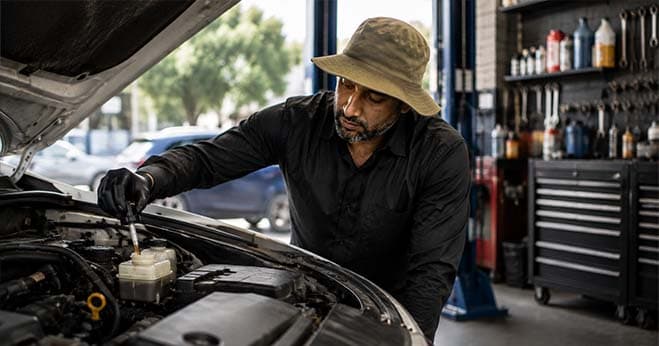
In terms of car maintenance, most people driving cars in Australia are very skilled at checking engine oil, tread wear on tyres, and cooling bottles. But hidden silently under the engine cover, there is one very important hydraulic fluid that gets ignored unless there seems to be a problem. If you have ever had thoughts on whether the brake fluid requires replacement or not and whether it lasts forever or not, then the straightforward answer to that would be an absolute yes.
Recognising the importance of brake fluid in making your car come to a stop will help you avoid serious system breakdowns. To get some useful maintenance information and other related services, you can log on to Patel Auto Service.
Table of Contents
- What Brake Fluid Actually Does
- Why Brake Fluid Loses Quality Over Time
- Signs Your Brake Fluid Needs Attention
- How Often Should Brake Fluid Be Changed?
- What Happens If You Never Change It?
- Brake Fluid and Your Roadworthy Inspection
- Can You Check Brake Fluid Yourself?
- Drive Safely with Patel Auto
- Frequently Asked Questions (FAQs)
What Brake Fluid Actually Does
In order to better understand why brake fluid needs to be changed, it will be useful to take a look at the basic principles of stopping your car. First of all, when you push the brake pedal, it does not work in the same way as pulling the cables attached to wheels. You push a piston in the master cylinder, which fills a special type of hydraulic fluid with pressure.
The fluid moves fast under the pressure through steel pipes and flexible tubes right into the brake callipers in front of the wheels. The fluid uses its pressure on the brake pads so that they press metal discs and transfer the kinetic energy of the car into the thermal one. Due to the fact that liquid cannot be compressed, all the pressure is transferred to the wheels without losses.
Why Brake Fluid Loses Quality Over Time
While the damage of motor oil usually results from thermal effects and dirt with carbon, brake fluid encounters another challenge, chemical breakdown. Because it absorbs moisture, it naturally takes in water from the air. Although there is a sealed cover on your master cylinder container, some amount of moisture gets in through tiny pores in rubber lines and during regular braking operations.
However, the presence of moisture in the fluid leads to a serious chemical issue. Cleaner brake fluid has a much higher boiling point, often higher than 230°C, to cope with the high temperatures generated by hard braking. When water gets into brake fluid, its boiling point falls sharply. When driving down steep mountain roads or making emergency stops on highways, the heat can cause the water to evaporate and form gas bubbles.
As gas is compressible, it won't push the fluid but will simply be compressed when you press the pedal, causing terrifying brake reduction or even complete pedal failure. Additionally, water trapped in the fluid will cause corrosion, leading to hidden corrosion of your ABS module, master cylinder, and steel brake lines.
Signs Your Brake Fluid Needs Attention
The breakdown of brake fluid usually precedes total failure, with some warning signs before. The following are common symptoms:
- Spongy or Soft Pedal: A spongy feel to your pedal, sinking further into the floor than it normally does or needing to be pumped before catching, means there is moisture or air bubbles in the hydraulic lines.
- Increased Stopping Distance: When your car takes longer distances to stop applying the same amount of force, it usually means the fluid is not transmitting sufficient pressure to the callipers.
- Dull Brown, Black or Cloudy Fluid: The fluid is usually almost clear with a slight yellow tint. However, when you open your brake fluid container and see dull brown, black or cloudy fluid with sediment, it needs a change.
- Brake Warning Light: A steady brake warning light on your dash indicates that the fluid levels are low and could mean that either the brake pads need to be changed or that you have a hydraulic leak.
If you experience any of the above signs, schedule a professional inspection at Patel Auto Service through our brake and tyre check to guarantee your brake hydraulic pressure and pads remain healthy.
How Often Should Brake Fluid Be Changed?
Generally, the manufacturers advise that you replace your brake fluid after every two years or 40,000 to 50,000 kilometres, whichever is earlier. This time frame may vary according to your particular driving conditions. Residents of places with humidity or heavy rainfall have a shorter period for brake fluid replacement because the fluid absorbs moisture faster than in dry places.
Don’t just go by any general guidelines but always refer to your owner’s manual. You will get to know the type of brake fluid required (DOT 3, DOT 4, or DOT 5.1) and the replacement time frame in the technical specifications portion.
- DOT 3 — Typical dry boiling point 205°C (401°F); wet 140°C (284°F). Common applications: standard passenger vehicles, older cars.
- DOT 4 — Typical dry boiling point 230°C (446°F); wet 155°C (311°F). Common applications: modern passenger cars, light commercial vehicles.
- DOT 5.1 — Typical dry boiling point 260°C (500°F); wet 180°C (356°F). Common applications: high-performance vehicles, heavy towing.
What Happens If You Never Change It?
Not replacing the brake fluid for many years can put your safety at risk and lead to costly repairs.
On one hand, the fluid that has been used for a long time makes you extremely unsafe to fully brake, becoming weaker while you are dealing with difficult situations, such as pulling a heavy load down a sloping road or making panic stops on the highway. On the other hand, the fluid contains water that gradually destroys the valves and control device inside.
Brake Fluid and Your Roadworthy Inspection
In places like New South Wales, a roadworthy certification, also referred to as a pink slip, is essential when it comes to car registration updates, transfers, or defect notices. While doing a thorough examination of your car, licensed inspectors will inspect the efficiency of your braking system and its components, such as brake pads, rotors, and brake fluid.
If your brake fluid is very dirty or leaks because of damaged seals, your car may not pass the required safety inspection. Get an expert inspection from Patel Auto Service's pink slip and registration inspections.
Can You Check Brake Fluid Yourself?
Opening the engine cover and taking a look at your brake fluid is one of the easiest things to do. It's located inside the semi-transparent plastic brake fluid reservoir at the back side of the engine on the driver's side of the car. There will be two marks labelled 'Minimum' and 'Maximum' on the side.
Fluid Level: Fluid level must lie between the two marks. A decreasing level means either that brake pads are worn out (pistons push further out so the fluid in the line needs to increase) or leakage occurs.
Fluid Colour: Clear fluid indicates a clean state, while murky fluid suggests some form of dirt.
Checking the level takes you a couple of seconds, but conducting a brake fluid flush would require you to visit a professional workshop because opening the brake fluid valve at each wheel in order to flush out old fluid from the system requires a bleeding machine which would make sure there are no air bubbles left in the ABS module or lines.
Drive Safely with Patel Auto
Changing brake fluid is relatively inexpensive, yet highly costly and risky if ignored. Making fluid changes a regular part of your maintenance schedule guarantees that your brake system is always ready to act when needed most. Being proactive about your brake fluid will not only keep you safe but also save the life of costly ABS components and guarantee reliable braking no matter what conditions you face.
If you have a soft feeling in your brakes, your registration update is around the corner, or you just can't remember the last time your fluid was changed, contact the professionals at Patel Auto Service in Marsden Park. Schedule your brake service today through the Patel Auto Service website and drive with complete peace of mind!
Frequently Asked Questions (FAQs)
- How often should I change my car's brake fluid?
- Most automotive manufacturers recommend replacing your brake fluid every 2 years or every 40,000 to 50,000 kilometres, whichever occurs first, to prevent moisture increase and corrosion.
- Why does brake fluid absorb moisture?
- Brake fluid is moisture-absorbing by design, meaning its chemical properties naturally draw in and absorb atmospheric moisture through microscopic pores in rubber hoses and during standard temperature fluctuations.
- Can I just top up my brake fluid instead of changing it?
- Top-ups only hide low fluid levels caused by fluid loss or, more commonly, worn brake pads. If your brake fluid is old, dark, or dirty, simply adding new fluid does not remove the moisture already present in the brake lines.
- What happens if water gets into the brake lines?
- Water in the brake fluid lowers its boiling point. During heavy braking, the water can turn into gas bubbles, making the brake pedal feel soft, reducing braking power, or even causing a complete loss of braking.
- Will old brake fluid cause my car to fail a roadworthy inspection?
- Yes. If an inspection finds very dirty brake fluid, leaking brake lines, or low hydraulic pressure, your vehicle may fail the safety check until the problems are fixed.